
The Late-Fee Question: How to Charge One Without Losing Clients
 Artisan Invoice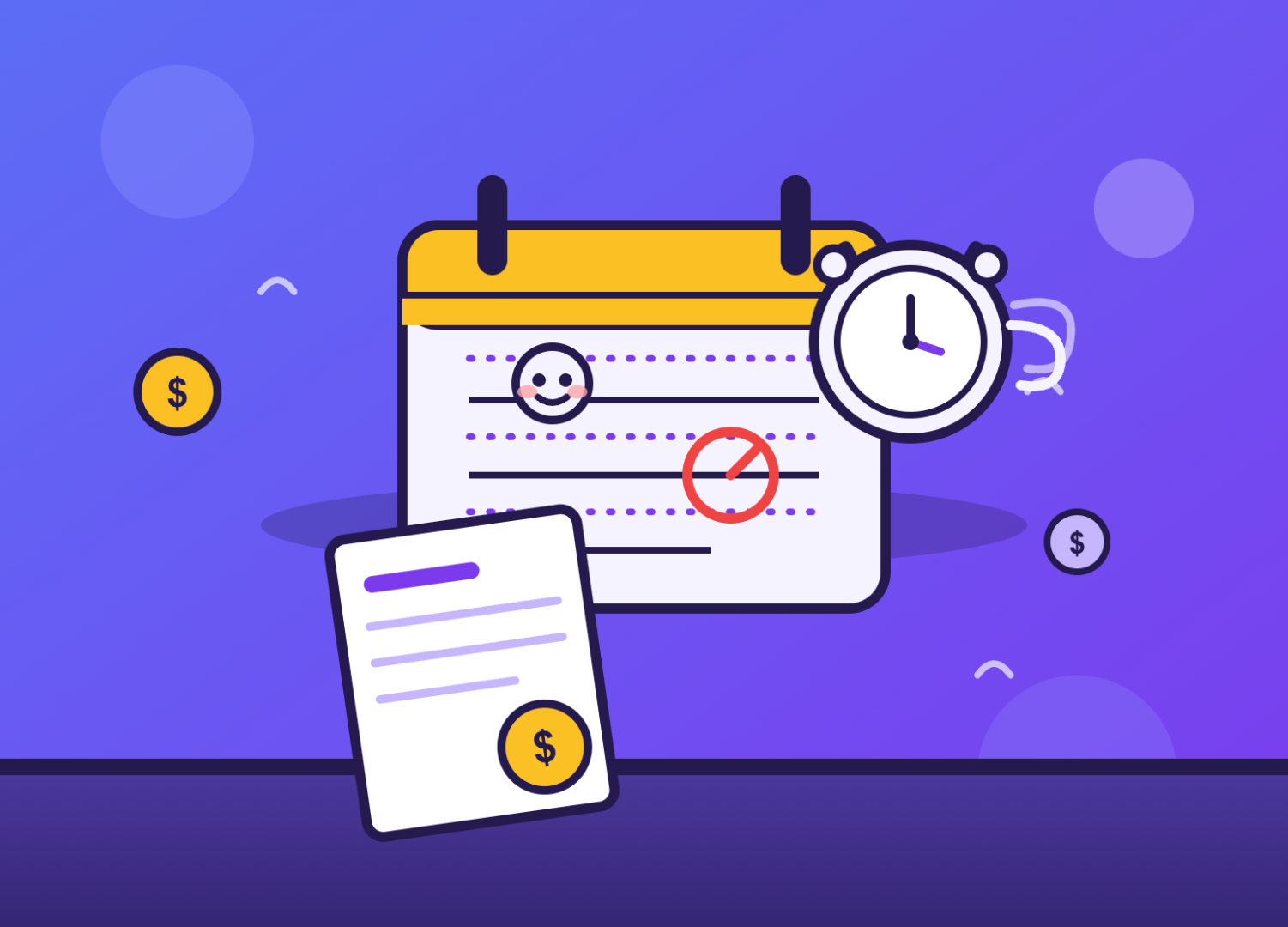
If you make things for a living, you've probably had this exact internal debate: should I actually charge a late fee?
Part of you says yes — your time has value, and chasing payments isn't part of the craft. Another part worries it'll make you look difficult, or worse, cost you a client over what might just be a busy week on their end.
Here's the short answer: yes, you should have one. And the good news is that a late fee, set up the right way, almost never damages a client relationship. In fact, it usually protects it.
A late fee isn't a punishment — it's a boundary
The instinct to avoid late fees usually comes from a good place: you don't want to seem money-hungry or difficult over what feels like a small thing. But a late fee isn't really about the money. It's a boundary. It quietly communicates something every professional relationship needs stated somewhere: your time and your work have a value, and that value doesn't disappear just because an invoice sits unopened for three weeks.
Clients respect boundaries. What erodes respect is the opposite — being someone whose payment terms are optional if you're busy enough to forget.
Most clients never actually pay it
Here's the part that surprises most makers when they first add a late fee: almost nobody ends up paying it. The fee isn't really a penalty mechanism — it's a nudge. Once a client sees a due date with a consequence attached, payments have a funny way of arriving right before that deadline hits. The fee does its job by existing, not by being collected.
Keep it kind and reasonable
You don't need an aggressive fee to get this effect. A small flat fee (say, $15–25) or a modest percentage of the invoice total (1–2% per week or per month) is plenty. The goal isn't to profit from lateness — it's to make on-time payment the obviously easier choice. Anything that feels punitive risks the opposite effect: a client who pays out of resentment rather than respect, and probably doesn't come back.
State it up front, before the work starts
This is the detail that makes or breaks how a late fee lands. A fee that shows up as a surprise on an overdue invoice feels like punishment — even if it's technically fair. A fee that was written into your terms before the project even began feels like professionalism. Same policy, completely different emotional read, entirely because of timing.
This is exactly where having clean, written invoice terms matters more than people expect. If your terms already spell out due dates and late fees clearly — something Artisan Invoices makes simple to set once and apply automatically to every invoice — the fee stops being a conversation you have to have. It's just how you do business, stated plainly from day one.
Build in a short grace period
A few days of slack goes a long way toward keeping the relationship friendly. Life happens — an invoice email gets buried, a client's own client pays them late, a long weekend delays everything by a few days. A grace period (3–5 days is typical) absorbs normal friction without you having to make judgment calls case by case about who "deserves" leniency. It's built into the policy, not into your patience.
Automate the reminder so it never feels personal
One of the biggest reasons makers avoid late fees isn't the fee itself — it's the awkwardness of enforcing it. Nobody wants to be the person manually messaging a client "hey, this is now late, here's your fee." That's where automation quietly solves the actual problem. When reminders and fees are automatic — applied the same way to every client, every time — it stops being a personal confrontation and becomes simply how the system works. Artisan Invoices' automatic payment reminders exist for exactly this reason: so the policy enforces itself, and you never have to be the bad guy in the conversation.
The reframe
Here's the mindset shift underneath all of this: you're not a bank. Every day an invoice sits unpaid past its due date, you're effectively lending that client money for free — money you've already spent time, materials, and skill to earn. A late fee doesn't make you unreasonable. It simply says, clearly and kindly, that you're not in the business of interest-free loans.
Save this before you add terms to your next invoice
Boundaries aren't pushy — they're professional. The makers who get paid on time consistently aren't the ones who chase harder. They're the ones who set the terms clearly, once, and let the policy do the work.
If your current invoicing setup makes it easy to add a due date, a grace period, and an automatic late fee — great, you're already ahead. If it doesn't, that gap is usually the actual reason payments feel like a chase in the first place, not anything about your clients.
Building your terms into every invoice automatically — due dates, grace periods, and late fees included — is one of the small things Artisan Invoices was built to handle so you don't have to think about it project to project.
 Money
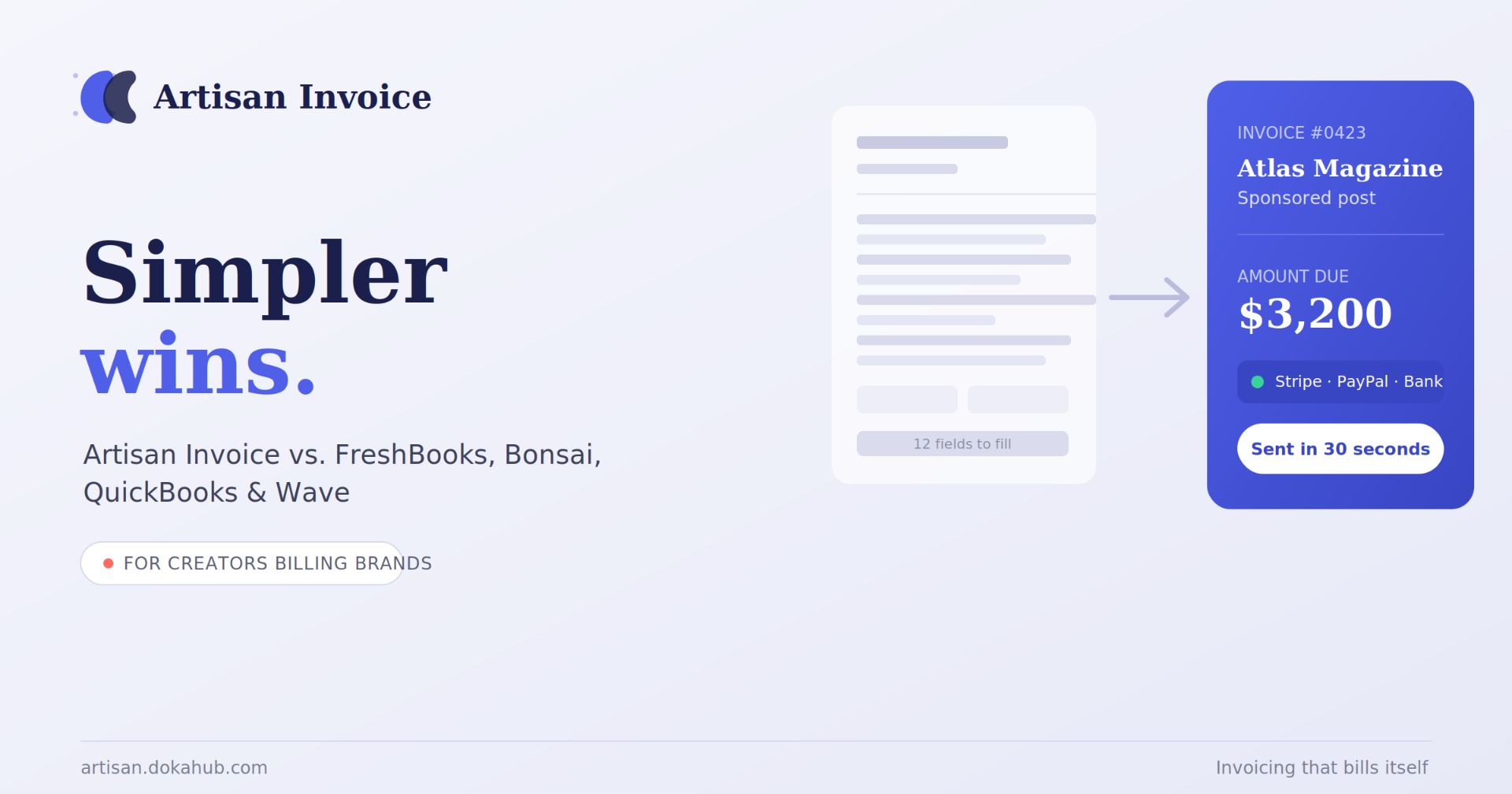
MoneyArtisan Invoice vs. FreshBooks, Bonsai, QuickBooks & Wave: The Simplest Invoicing App for Creators in 2026
If you're a creator billing brands for sponsorships, deliverables, or royalties, you've probably tried to make FreshBooks, QuickBooks, or Bonsai work — and found yourself buried in features built for a completely different job. These tools were designed for agencies and consultants managing dozens of clients and full-blown bookkeeping. You just want to send a clean invoice, get paid, and get back to creating.
Invoicing international clients without losing 5% on fees
Multi-currency invoicing, Wise vs. PayPal, and the right way to write 'USD' on a line item. A guide for creators earning from abroad.
Pricing your work as a creator: base, bonuses, and the 'no'
Three ways to structure rates for sponsored content, and the one thing every creator should include in their invoice line items.
Liked this? Get the next one in your inbox.
One short brief a month for creators. Smarter invoicing, tax reminders, the occasional funny tax meme.