
Pricing your work as a creator: base, bonuses, and the 'no'
 Toby VegaCreator economy writer
Most creators under-price their work in the first two years and over-price it once they hit a 500k-follower milestone. Both are mistakes. The right price for sponsored content is whatever you can say out loud without flinching — and the right invoice structure makes that price defensible on paper.
The base + bonuses structure
A single lump-sum line item reads as 'negotiable.' Three line items read as 'professional, this is what we agreed.' Break your invoice into a base deliverable plus optional bonuses, and present it as a quote before the work starts:
Base — 1 sponsored reel, 30-day whitelisting: $2,400
Bonus — usage extension to 60 days: + $600
Bonus — whitelisting for paid amplification: + $400
The bonuses are optional in the negotiation, but they exist on paper from day one. If the brand wants only the base, removing a line item feels less confrontational than haggling over the total.
The 'no'
Every pricing structure on the planet works better if you can say no to deals that don't fit. Three rules:
- 1
If the brand won't budge below 50% of your floor rate, the work isn't worth it. The exception is when you're buying a long-term relationship, not a one-off check.
- 2
If they're asking for exclusivity in a category you might want to grow in next year, stay small or say no. A short-term check isn't worth a year of cap on your category.
- 3
If the deliverable scope expands mid-project without a rate conversation, invoice the extra work separately — and tell them in advance that you will.
Worth repeating: Saying no this week is the reason the next yes pays 3× more. Every creator who has scaled past $10k/mo has said 'no' to at least one deal that was offered and felt easy.
What every invoice line item should include
No matter the structure, every line item on every invoice should clearly answer four questions: who is doing the work, what the work is, when it was delivered, and how much it costs. If your AP contact can't answer those four questions from the invoice alone, you're going to get a follow-up email — and that email delays payment.
 Money
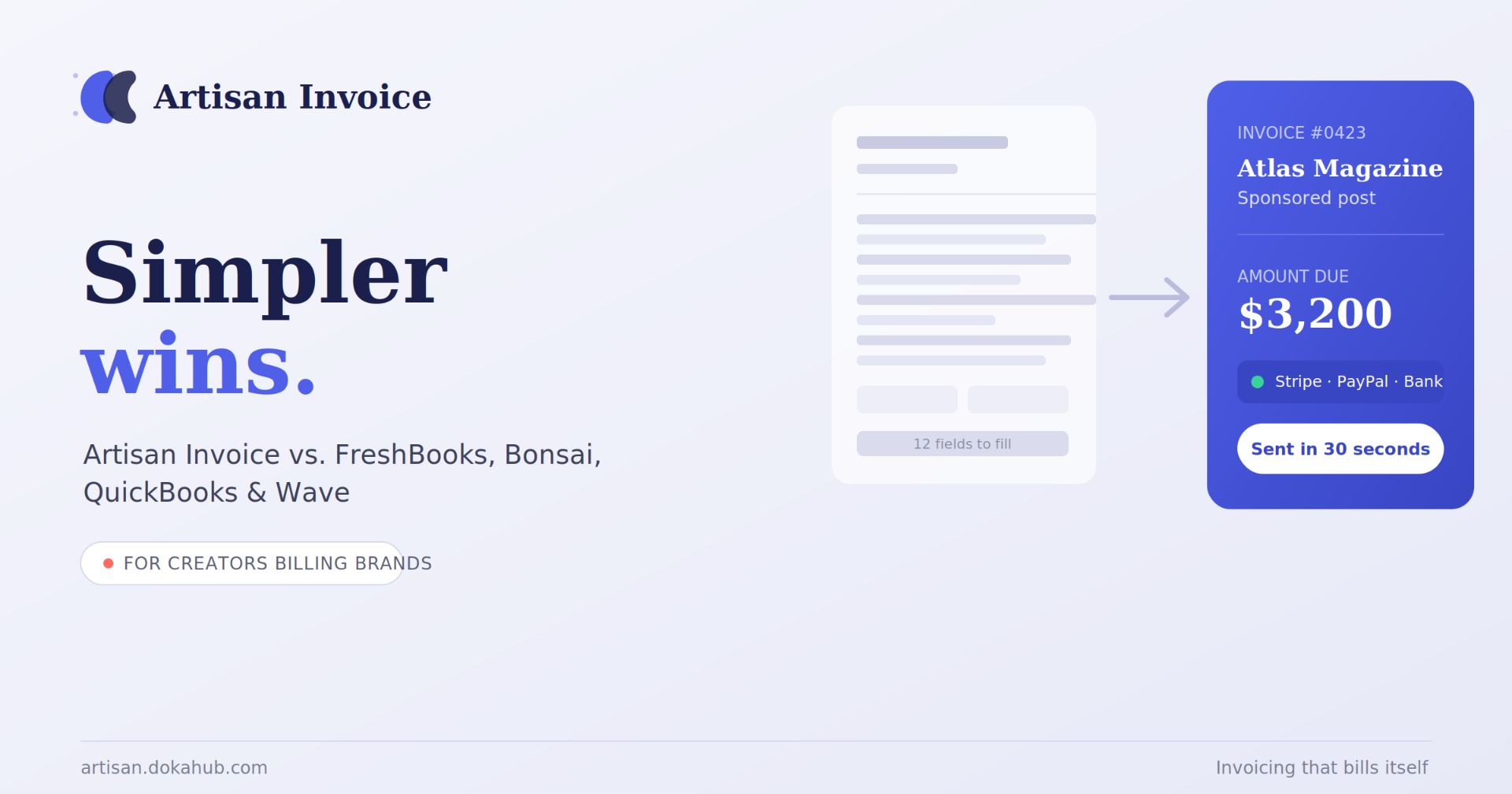
MoneyArtisan Invoice vs. FreshBooks, Bonsai, QuickBooks & Wave: The Simplest Invoicing App for Creators in 2026
If you're a creator billing brands for sponsorships, deliverables, or royalties, you've probably tried to make FreshBooks, QuickBooks, or Bonsai work — and found yourself buried in features built for a completely different job. These tools were designed for agencies and consultants managing dozens of clients and full-blown bookkeeping. You just want to send a clean invoice, get paid, and get back to creating.
 Money
MoneyThe Late-Fee Question: How to Charge One Without Losing Clients
If you make things for a living, you've probably had this exact internal debate: should I actually charge a late fee? Part of you says yes — your time has value, and chasing payments isn't part of the craft. Another part worries it'll make you look difficult, or worse, cost you a client over what might just be a busy week on their end.
Invoicing international clients without losing 5% on fees
Multi-currency invoicing, Wise vs. PayPal, and the right way to write 'USD' on a line item. A guide for creators earning from abroad.
Liked this? Get the next one in your inbox.
One short brief a month for creators. Smarter invoicing, tax reminders, the occasional funny tax meme.