
Invoicing international clients without losing 5% on fees
 Yuki HartTax writer for creators
International invoicing has two layers of fees you don't see until the money lands: the brand's outgoing wire fee, and the currency-conversion fee your bank quietly applies. Both are 1–3%. By the time the invoice clears, you can lose 5% of your gross without noticing.
Write the line item in the brand's local currency
First, decide: are you billing in your home currency or in the brand's? The right answer is almost always the brand's. A Brussels brand paying a US creator in USD adds currency-conversion costs on their side, and they'll often mentally discount your rate against local creators. Bill in EUR for a Brussels brand. Bill in GBP for a London one. Bill in USD for a New York one.
"I billed my first three UK brands in USD. All three politely asked to be invoiced in GBP. I switched; my close rate went from 'rare' to 'almost always.'" — Hana T., Newsletter writer · Substack
Wise vs. PayPal for actually receiving the money
Wise: typically 0.4–1.5% all-in, mid-market rate. Best for large invoices (>$2,000) where the percentage compounds meaningfully.
PayPal: 3–4% with currency conversion, but instant and universally accepted. Best for small invoices, one-off work, and clients who refuse to bank-transfer internationally.
Bank wires (SWIFT): $25–50 flat fee plus a 1–2% conversion spread built into the exchange rate. The worst of both worlds. Don't choose this if you have alternatives.
The 'how to write USD on a line item' trick
On multi-currency invoices, write the amount in two forms: the local currency as the primary, and your home currency in parentheses, with the exchange rate used. 'EUR 2,200 (USD 2,400 @ 0.92 EUR/USD).' This prevents the brand's AP team from doing their own rate check and emailing to ask why the invoice is different from what they expected.
When it gets complicated
If you invoice more than five countries, or invoicing represents more than 30% of your income, talk to an accountant who specialises in cross-border creator work. The first year alone usually saves more than the accountant's fee in un-lost conversion fees.
 Money
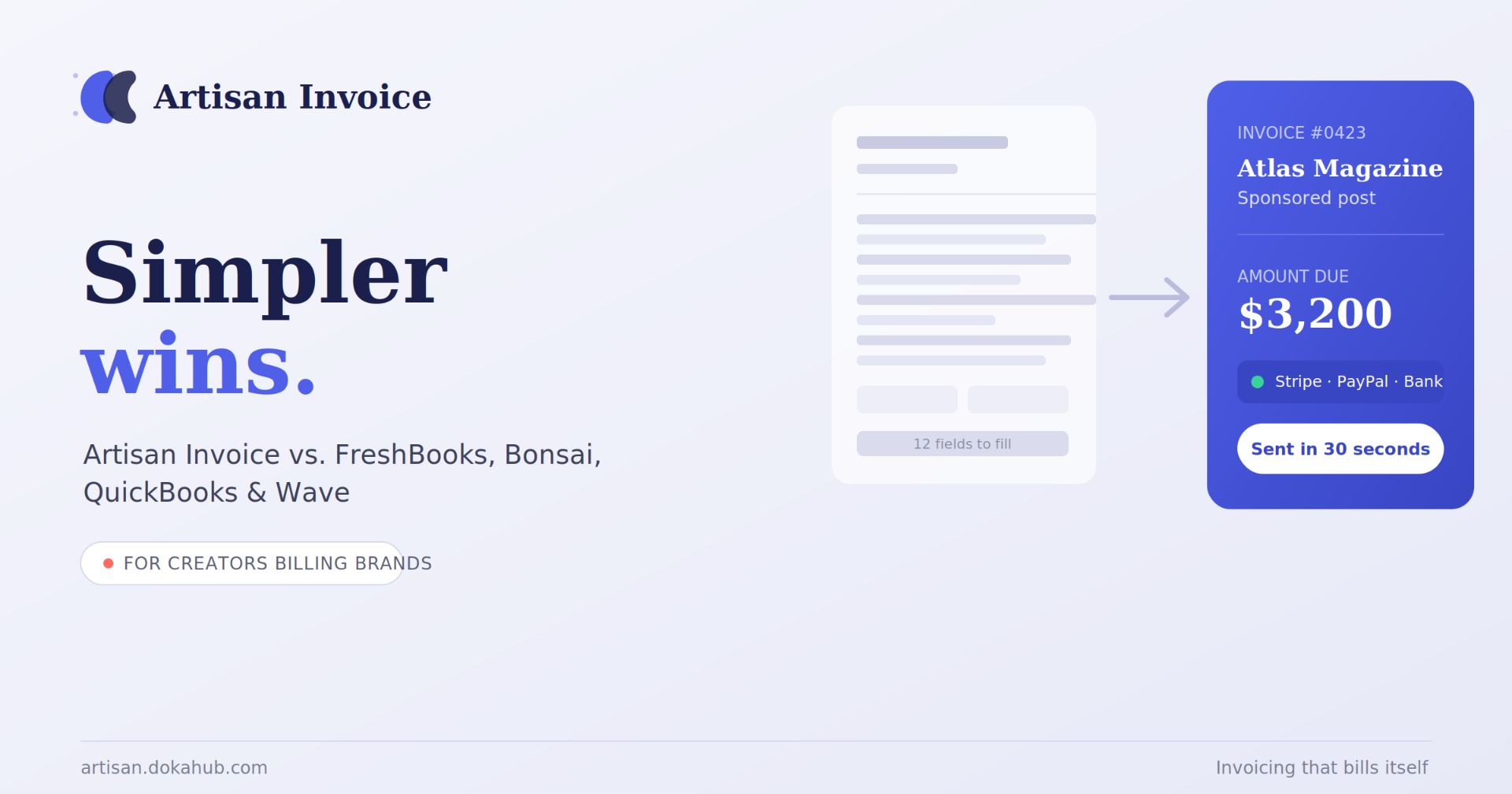
MoneyArtisan Invoice vs. FreshBooks, Bonsai, QuickBooks & Wave: The Simplest Invoicing App for Creators in 2026
If you're a creator billing brands for sponsorships, deliverables, or royalties, you've probably tried to make FreshBooks, QuickBooks, or Bonsai work — and found yourself buried in features built for a completely different job. These tools were designed for agencies and consultants managing dozens of clients and full-blown bookkeeping. You just want to send a clean invoice, get paid, and get back to creating.
 Money
MoneyThe Late-Fee Question: How to Charge One Without Losing Clients
If you make things for a living, you've probably had this exact internal debate: should I actually charge a late fee? Part of you says yes — your time has value, and chasing payments isn't part of the craft. Another part worries it'll make you look difficult, or worse, cost you a client over what might just be a busy week on their end.
Pricing your work as a creator: base, bonuses, and the 'no'
Three ways to structure rates for sponsored content, and the one thing every creator should include in their invoice line items.
Liked this? Get the next one in your inbox.
One short brief a month for creators. Smarter invoicing, tax reminders, the occasional funny tax meme.