
The 30-day rule: how to set invoice due dates that actually get paid
 Mira AchebeHead of product · Artisan Invoice
We pulled 28,000 invoices sent through Artisan Invoice in 2025 and bucketed them by due-date window — Net 7, Net 14, Net 30, Net 45, and Net 60+. The single biggest predictor of getting paid quickly wasn't the size of the invoice or the platform used to send it. It was a 30-day due date.
Why a 30-day window performs so well
Most brands and studios run their accounts-payable cycle on a monthly cadence. Their internal cutoff for paying invoices is often the last week of the month. If your invoice lands with 30+ days on it, it slots neatly into the next month's AP run, gets approved within that batch, and clears in 9 days on average.
Push that out to Net 45 or Net 60 and you stop being 'this month's invoice' — you become 'next month's invoice,' and the cycle compounds. Net 7 and Net 14 also perform well, but only because they force urgency; without that implied urgency, they're worse than Net 30 because most AP teams won't cut a check the same week they receive a bill.
How to apply this to your next invoice
Default new clients to Net 30 unless you've explicitly agreed otherwise in writing.
Send the invoice the moment the deliverable is delivered — the clock should start ticking on the work being done, not on the day you remember to invoice.
If a brand tries to negotiate Net 60 or Net 90, push back — the data shows their average payment time at those terms is 41 days.
Loosely related: include every line item and the brand's PO number on the first line. Less back-and-forth means less delay.
Worth remembering: If your brand negotiates Net 7 because they have an in-flight campaign, use it — but treat that as the exception, not the rule. The rest of your clients should default to Net 30.
The wording on the invoice
Don't bury the due date in tiny print. Put it on its own line, larger than the rest of the body copy, and repeat it verbally in the email subject: 'Invoice due May 14 — $2,400.' A line like that gets opened twice as often as 'Invoice attached.'
"When our team stopped writing 'Net 30' and started writing 'Due by Friday, May 14,' our average time-to-pay dropped from 19 days to 6." — Devon R., YouTube creator · 1.2M subscribers
 Money
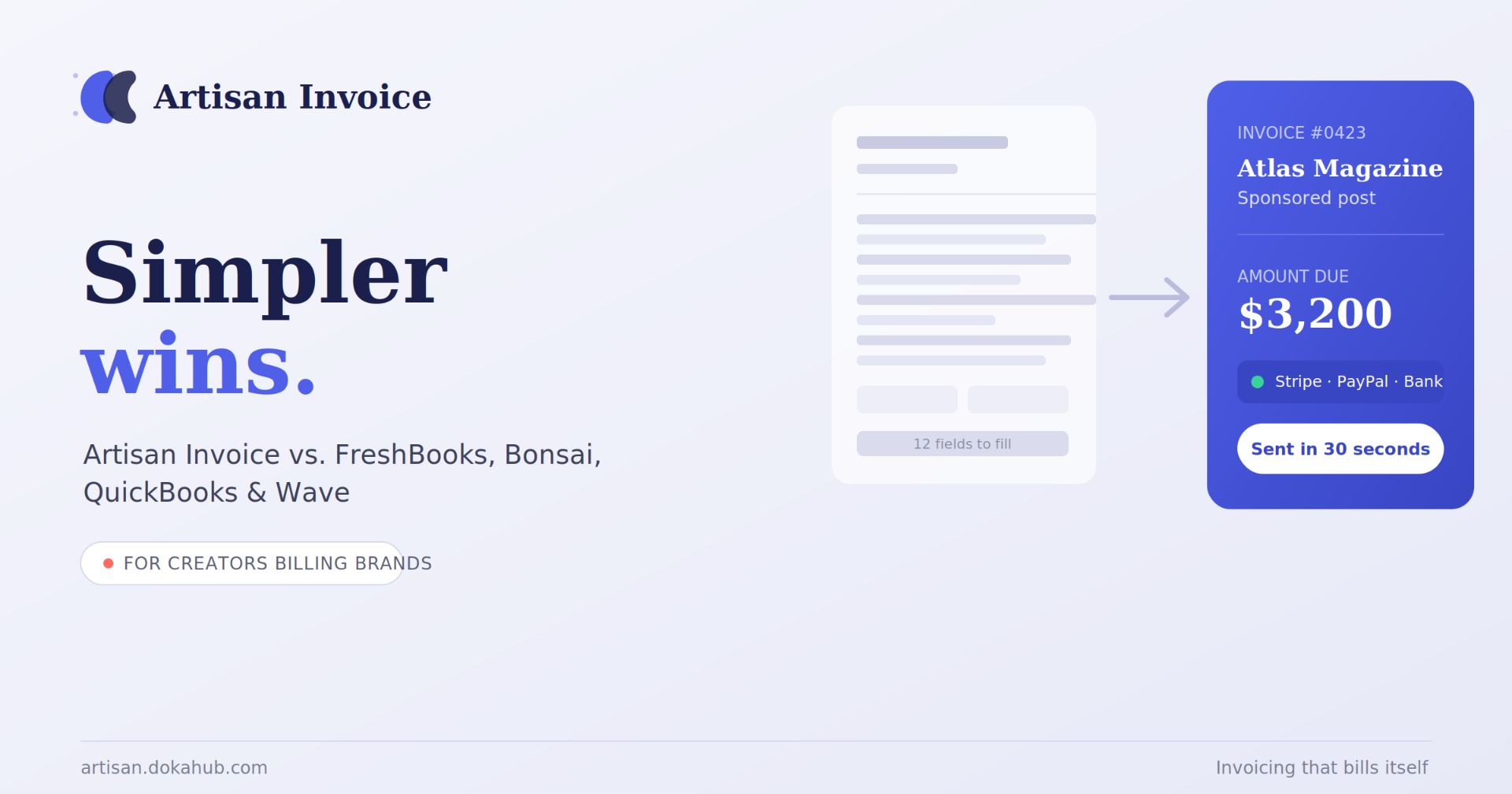
MoneyArtisan Invoice vs. FreshBooks, Bonsai, QuickBooks & Wave: The Simplest Invoicing App for Creators in 2026
If you're a creator billing brands for sponsorships, deliverables, or royalties, you've probably tried to make FreshBooks, QuickBooks, or Bonsai work — and found yourself buried in features built for a completely different job. These tools were designed for agencies and consultants managing dozens of clients and full-blown bookkeeping. You just want to send a clean invoice, get paid, and get back to creating.
 Money
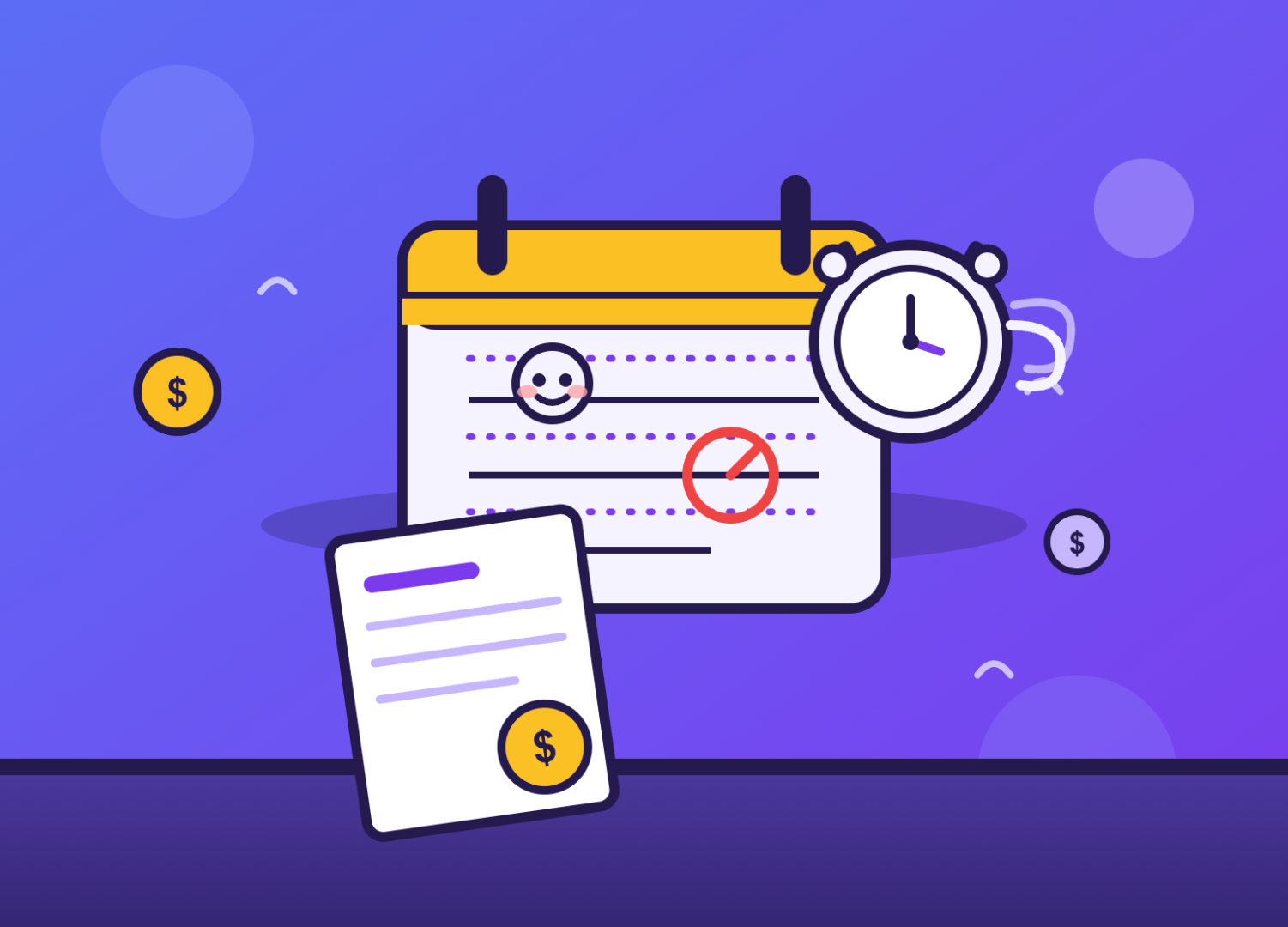
MoneyThe Late-Fee Question: How to Charge One Without Losing Clients
If you make things for a living, you've probably had this exact internal debate: should I actually charge a late fee? Part of you says yes — your time has value, and chasing payments isn't part of the craft. Another part worries it'll make you look difficult, or worse, cost you a client over what might just be a busy week on their end.
Invoicing international clients without losing 5% on fees
Multi-currency invoicing, Wise vs. PayPal, and the right way to write 'USD' on a line item. A guide for creators earning from abroad.
Liked this? Get the next one in your inbox.
One short brief a month for creators. Smarter invoicing, tax reminders, the occasional funny tax meme.